MessagesMessage Archive

July 2026 – September 2026

Exodus: Deliverance and Formation

Exodus

8 messages

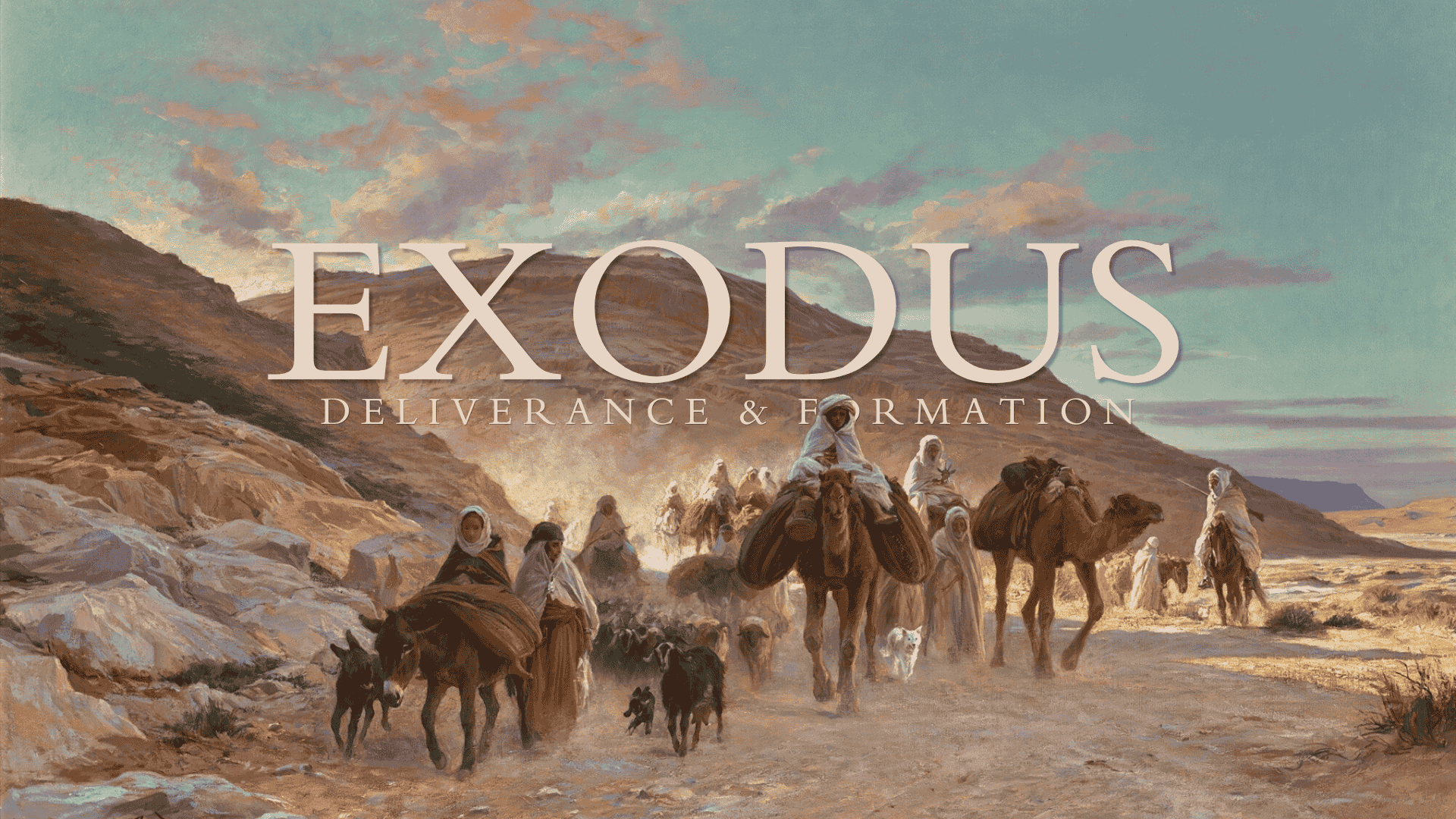
Exodus traces God’s rescue of His people from Egypt to His dwelling among them via the Tabernacle. It opens with God who remembers, sees and calls ordinary, insecure people like Moses, with His presence supplying the adequacy (weeks 1-2).

The plagues are a cosmic showdown with Egypt’s gods, previewing Christ’s victory over supernatural powers. Passover and the Red Sea then show salvation through a substituted lamb and passage through the waters, which the New Testament reads as pictures of Christ and baptism (weeks 3-5).

The wilderness forms God’s people through dependence, though Israel’s grumbling serves as a warning for the church (week 6). Sinai gives the Ten Words and covenant laws: obedience responds to grace, and holiness means allegiance to the true King (weeks 7-8). The series ends with the tabernacle, God’s presence restored after the ‘golden calf crisis’ through intercession at Moses’ ‘tent of meeting’ (week 9).

Throughout, Moses’ life models God forming His leaders, and the New Testament shows Christ fulfilling each stage of Israel’s journey out of Egypt, through the wilderness to the Mountain (Sinai).

In order

Sunday, July 5, 2026

Exodus: Deliverance & Formation

Ian Brinksman

Message 01

Summary

Exodus is a foundational biblical narrative that shapes our understanding of redemption, deliverance, & God’s covenant relationship with His people. Continuing the story of Genesis, it connects Israel’s sojourn in Egypt with God’s promises to Abraham, portraying the exodus as both the fulfillment of those promises & the defining event of Israel’s identity. It also foreshadows the greater redemption accomplished by Jesus Christ in the New Testament.

The book unfolds in two parallel movements: Moses’ deliverance & commissioning, followed by Israel’s deliverance from Pharaoh & commissioning through the covenant at Mount Sinai. Throughout, Exodus highlights God’s faithfulness even when He seems absent. Although God appears silent during Israel’s oppression, He works through the courageous actions of women such as Shiphrah, Puah, Jochebed, Miriam, and Pharaoh’s daughter to preserve Moses. Their faithful resistance demonstrates that God is actively accomplishing His purposes, even when His presence is not immediately apparent.

Sunday, July 12, 2026

Moses’ Failure and Formation

Del Martin

Message 02

Summary

Before God called Moses, He had already seen the suffering of His people. He heard the cries of the Israelites, remembered His covenant with Abraham, saw their oppression, and knew their need. In response, God called Moses to lead His people out of Egypt. Throughout Moses' first eighty years, God was shaping and preparing him for this task—to deliver Israel from slavery and lead them to the land He had promised.

Moses struggled with God's call, believing he was not qualified for such a responsibility. Yet God assured Moses of His presence, revealed His own character and name, equipped him for the task, and provided Aaron as a companion in the mission. Despite his initial resistance, Moses ultimately obeyed God and returned to Egypt with Aaron to fulfill the calling God had given him.

As Hebrews 11:24–26 reminds us, Moses made a deliberate choice to identify with God's people rather than pursue the fleeting pleasures and privileges of Egypt. As disciples of Jesus, we too are called to make a choice. We must count not only the cost of discipleship, but also the cost of choosing not to follow Christ faithfully.

Sunday, July 26, 2026

Who Killed the Firstborn: God, Demons, the Devil?

Nigel Tomes

Message 04

Summary

Exodus 12 presents a striking puzzle. The Passover account repeatedly says the LORD struck Egypt's firstborn, yet Exodus 12:23 says He kept -- the destroyer -- from entering Israelite homes. So, who killed Egypt's firstborn—God or the destroyer? And who is this mysterious figure? Some view the destroyer as God's judgment personified; others identify an angelic or demonic being. The New Testament provides the answer: Hebrews reveals that Jesus defeated the Devil –the destroyer--- who holds the power of death. On the first Passover night, the lamb's blood on the door was God's protective sign as He delivered Israel from Pharaoh's oppression. But Jesus’ blood on the cross does much more. He is the greater Passover Lamb. His blood not only shields God's people from judgment but also conquers the Devil, forever freeing all who trust in Him from Satan's slavery, sin, death, and the fear of death.

Sunday, August 2, 2026

Out of Egypt, Via the Wilderness & to the Mountain

Ian Brinksman

Message 05

Summary

The exodus event actually happens in chapters 13-15. The people of Israel leave Egypt, their slavery is over, & they cross the Sea of Reeds to begin a new life with God. That new life has all kinds of unexpected twists & turns to it. Why would God not protect his people from things that threatened their basics of life? They didn’t have enough water. They didn’t have enough food. And as if one time wasn’t enough, they experienced not having enough water a second time. All this occurred as the journeyed through the wilderness. Prof. Carmen Imes calls the wilderness God’s workshop. It’s in that wilderness that Israel gets to know their God, his ability & willingness to provide for them, & for them to trust him. Everything God allowed to come their way was an opportunity for them to realize these things more & more. Slowly but surely their trust in God grew. So why would he allow such things to come upon his people? Well, it’s in God’s workshop that he forms his people into his treasured possession, those he entrusts with the responsibility of making him known to the nations around them. It’s precisely what he asked of Abraham (Gen. 12:1-3). It should be of no surprise that Peter reminded us that that’s exactly what God has called us to also (1 Pet. 2:9)

Sunday, August 9, 2026

The Church in the Wilderness: Under God's Wrath?

Nigel Tomes

Exodus 17:1-7; Psalm 95:6-11; Hebrews 3:7-14

Message 06

Summary

The exodus generation repeatedly failed to trust God despite witnessing His works at Massah and Meribah (Exodus 17). Psalm 95 declares God’s verdict: He was angry with them for 40-years and swore they would never enter His rest. They perished in the desert. Hebrews 3:7–4:13 applies this warning to the church, portraying believers as a new wilderness people. Yet Hebrews reinterprets the 40-years as a season of experiencing God’s works, not enduring wrath. Written roughly 40-years after Pentecost, Hebrews follows an era of blessing—marked by miracles and the Holy Spirit —not punishment. With these resources, believers can avoid Israel’s failures and reach God’s goal. Crucially, Hebrews expands “rest” beyond Canaan to God’s ultimate rest, still open to “today’s” hearers. The application is clear: we’re not under God’s wrath like Israel in the desert, but under grace. With Christ as our greater Moses and High Priest, we can persevere in faith to enter God’s ultimate rest!

Sunday, August 16, 2026

Finding Life in the 10 Commandments

Bin Choi / Ian Brinksman

Exodus 19:1-20:17, 23; 34:28

Message 07

Summary

The 10 Commandments are among the most well known things in the Bible. Virtually everyone, whether they’re raised in a Church or Synagogue or not, knows of them, & can probably name a few of them. Are they meant to be taken merely as a check list for us to gauge how we are doing? Now that Jesus has died on the cross, are they simply irrelevant for Christians? They were given to people who’d been rescued from slavery, & were invited by Yahweh, the One who rescued them, to live new lives in community. The new life God envisioned for them is laid out in the 10 Commandments. We can boil them down in this way: Worship Yahweh only & represent him well in all aspects of life. I think we are challenged today to consider carefully if God still has these two principles for us to follow, even though we do not follow the 10 Commandments.

Sunday, August 30, 2026

Golden Calf Crisis & Moses' Tent of Meeting

Nigel Tomes

Psalm 106:19-23; Exodus 32:15, 19-20, 25-26, 28-29; 33:1, 3, 6, 7-11; Hebrews 13:11-13

Message 09

Summary

Just forty days after Israel heard God's voice at Sinai, they built a golden calf — trading the living God for an image they could control, & plunging the relationship between God and His people to its lowest point in Scripture. God's presence is withdrawn, His anger is real, & the promised Tabernacle is put on hold. How was this crisis resolved? Moses and his (little-known) 'Tent of Meeting' played a major role...

Sunday, September 6, 2026

The God Who Dwells with Humanity

Del Martin

Exo. 35:4-9, 29-35; 40:16, 19, 25, 34-38

Message 10

Summary

The whole Bible reveals God’s desire to dwell with humanity. This theme begins in Genesis and finds its fulfillment in Revelation. The tabernacle is a clear expression of God’s desire to live among His people. Soon after the Israelites left Egypt, God instructed Moses to build the tabernacle. When it was completed and erected, the glory of God filled it, signifying His presence among His people.

Even after Israel’s failure in the incident of the golden calf, God remained willing to dwell among them. He did not wait until His people had become holy and fully transformed before coming to live among them. Rather, He came to dwell in their midst in order to transform them. This is true for us as well. God does not wait until we have been transformed before drawing near to us. He comes to us, dwells with us, and by His presence begins the work of changing us.

We have the assurance of Jesus’ promise that He is with us always (Matt. 28:20), and we look forward to the day when this promise will be fully realized: “God’s dwelling place is now among the people, and he will dwell with them” (Rev. 21:3). From Genesis to Revelation, the story of Scripture is ultimately the story of God making His dwelling among His people.

These messages are free to use — please credit Church in Toronto. About this archive

All series

Updated November 6, 2026.